Hypnotherapy Pvt Ltd

Vibha Jain

Hypnotherapist. Fifteen years of practice, more than 2,400 sessions conducted, and one working conviction: that people change more readily when they are understood than when they are corrected.

Portrait of Vibha Jain, hypnotherapist at Hypnotherapy Pvt Ltd

Professional introduction

A practice shaped by fifteen years of listening

Vibha Jain practises as a hypnotherapist with Hypnotherapy Pvt Ltd. Across more than fifteen years and in excess of 2,400 sessions, her work has consistently returned to the same starting point: understanding what a behaviour is doing for the person who has it, before considering how it might change.

That emphasis matters particularly with spending. Compulsive shopping and emotional spending are among the behaviours most likely to be met with judgement — from others and, more painfully, from within. People frequently arrive having already been told to be more disciplined, more sensible, more careful with money. They arrive knowing all of that, and still finding themselves in the same loop.

The work therefore begins somewhere other than advice. It begins with an honest account of what has been happening, in the person's own words and at their own pace, with no expectation that it should be tidy or already understood.

People rarely need to be told that a pattern is costing them something. They usually know. What is harder, and more useful, is understanding what it has been protecting them from.

The approach in practice
15+Years of experience
2,400+Sessions conducted
1:1Individual sessions
PrivateConfidential
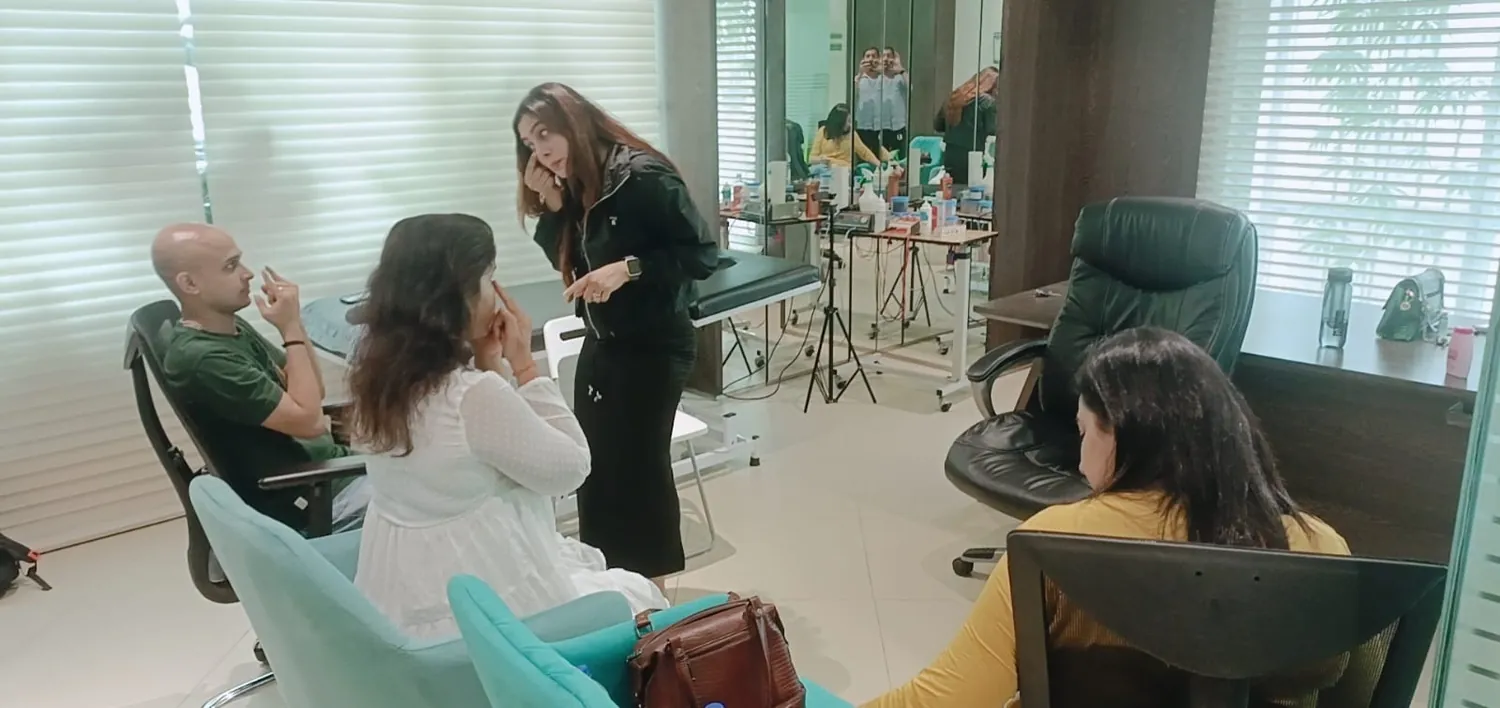
Vibha Jain in conversation with a small group during a practical relaxation session

What this looks like in practice

Longer first conversations. Fewer assumptions. A pace set by the person rather than by a programme. And a plain answer when hypnotherapy is not the right fit for what someone is dealing with.

The approach

Five principles that shape every session

  1. Understanding comes before interventionNothing useful is suggested until the pattern is genuinely understood — when it happens, what precedes it, what it appears to provide, and what has already been tried.
  2. Judgement is left at the doorShame is a poor motivator and a reliable trigger. Sessions are designed to be one place where a person can describe their spending honestly without managing anyone else's reaction to it.
  3. Every person is differentTwo people with similar patterns may need entirely different approaches. Nothing here is delivered as a fixed programme applied identically to everyone.
  4. Progress is not linearSetbacks are treated as information rather than failure. A return to an old response tells you something about a trigger you had not yet mapped.
  5. Limits are stated plainlyWhere a concern sits outside the scope of hypnotherapy — clinically, psychologically or financially — that is said clearly, along with the suggestion to involve appropriate professional support.

Working with spending patterns

Why compulsive shopping needs a particular kind of care

Spending behaviour carries a layer that many other habits do not: it is entangled with money, and money is entangled with secrecy, self-worth and relationships.

The secrecy layer

Purchases hidden from a partner, parcels intercepted before anyone sees them, statements left unopened. Secrecy protects against a difficult conversation in the short term and deepens isolation over the long term — which itself becomes a trigger.

The speed of modern buying

Saved cards, one-click checkouts and instant approval have removed almost all the friction that once sat between an urge and a purchase. Any approach that ignores this is working with a version of the problem that no longer exists.

The emotional function

Buying is frequently doing a job: soothing, celebrating, filling, distracting or expressing. If that job is not acknowledged and given somewhere else to go, removing the behaviour tends to leave a gap that quickly refills.

Beyond one-to-one sessions

Group and workplace relaxation sessions

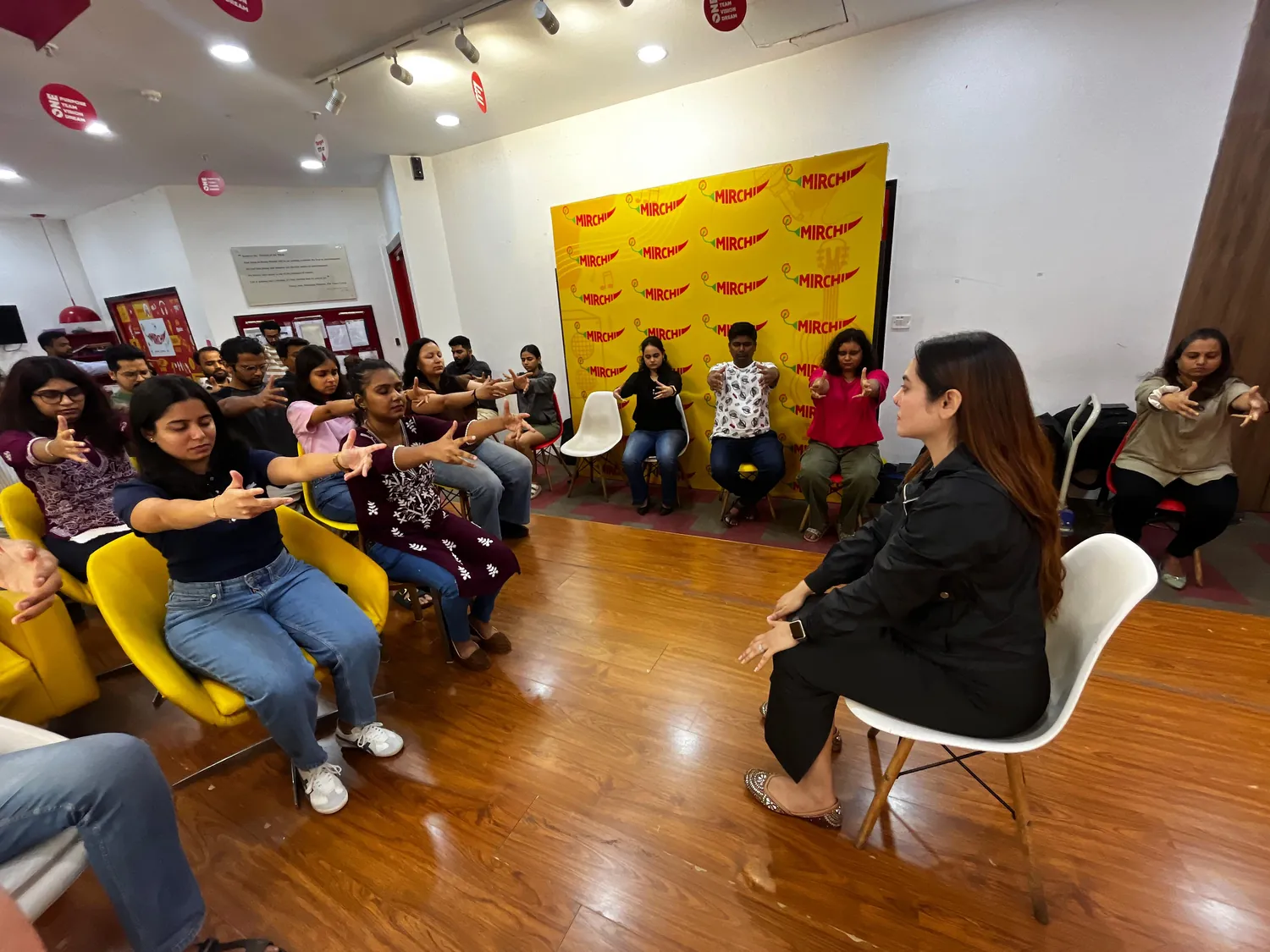
Alongside individual work, Vibha Jain conducts group sessions and workplace wellbeing sessions introducing relaxation techniques, focused attention and practical approaches to stress and habitual responses.

Group settings serve a different purpose to individual sessions. They are educational rather than therapeutic, they do not involve personal disclosure, and they often function as a first, low-pressure encounter with what relaxation and focused attention actually feel like — which for many people quietly removes a great deal of apprehension.

  • Practical and experiential — participants try techniques rather than only hearing about them.
  • No personal disclosure required — nobody is asked to share anything about themselves.
  • Realistic framing — what relaxation techniques can and cannot do is stated plainly.
Vibha Jain leading a seated group through a guided relaxation exercise at a workplace session
Participants following a guided relaxation exercise during a group workshop led by Vibha Jain

Transparency

What is offered — and what is not

Clear boundaries are part of responsible practice. The information below is stated plainly so that anyone considering hypnotherapy can make an informed decision.

Several people holding wooden puzzle pieces together, representing a collaborative approach to change

What is offered

Private, unhurried, non-judgmental sessions. Careful exploration of triggers, automatic responses and the function a behaviour is serving. Hypnotherapy techniques including relaxation, focused attention, therapeutic suggestion and, where appropriate, guided imagery. Honest discussion of what is and is not working.

What is not offered

No guaranteed results, no promise of a permanent cure, and no claim that a single session resolves compulsive buying. No diagnosis of any medical or psychological condition. No medical, psychiatric or financial advice. No claim that hypnotherapy is scientifically proven to cure shopping addiction.

Qualifications and credentials

Only the professional experience stated on this website — 15+ years of practice and 2,400+ sessions conducted — is presented here. Details of qualifications, memberships or affiliations are not listed, and nothing beyond what has been confirmed is claimed. You are welcome to ask any questions about background and training directly before deciding to proceed.

Getting started

What a first conversation is actually like

01 No preparation needed

You do not need the right words

Many people begin with “I am not sure how to explain this.” That is an entirely normal starting point. Nothing needs to be organised, quantified or justified before you get in touch.

02 Questions welcomed

You can ask anything first

How hypnotherapy works, what a session involves, what happens if it does not suit you, whether it is appropriate for your situation at all. Asking questions is not an inconvenience — it is a sensible way to begin.

03 No obligation

A conversation is not a commitment

Getting in touch does not commit you to sessions. If hypnotherapy is not appropriate, or another form of support would serve you better, you will be told so directly.